What is it
Gynaecomastia is a condition in men characterised by the enlargement of breast tissue, sometimes significant and with ptosis (sagging). It is usually bilateral but may also be asymmetrical. This condition results from hypertrophy of fatty or glandular tissue and commonly appears during adolescence or early adulthood, often causing discomfort and social withdrawal.
In most cases, the cause is idiopathic (unknown), but it can sometimes be associated with obesity, hormonal changes, or underlying medical conditions.
Who is it for
Surgery is indicated for men who experience aesthetic or emotional discomfort due to the volume and projection of their breasts — particularly when it affects clothing choices or leads to social or interpersonal withdrawal, especially in situations involving exposure (such as at the beach or gym).
It is suitable for:
- Men in good general health without underlying medical conditions requiring treatment;
- Men whose breast development has stabilised (or adolescents who are informed about the potential need for a second procedure once growth stabilises);
- Non-smokers;
- Men with realistic expectations, appropriate to their body type, skin elasticity, and degree of sagging.
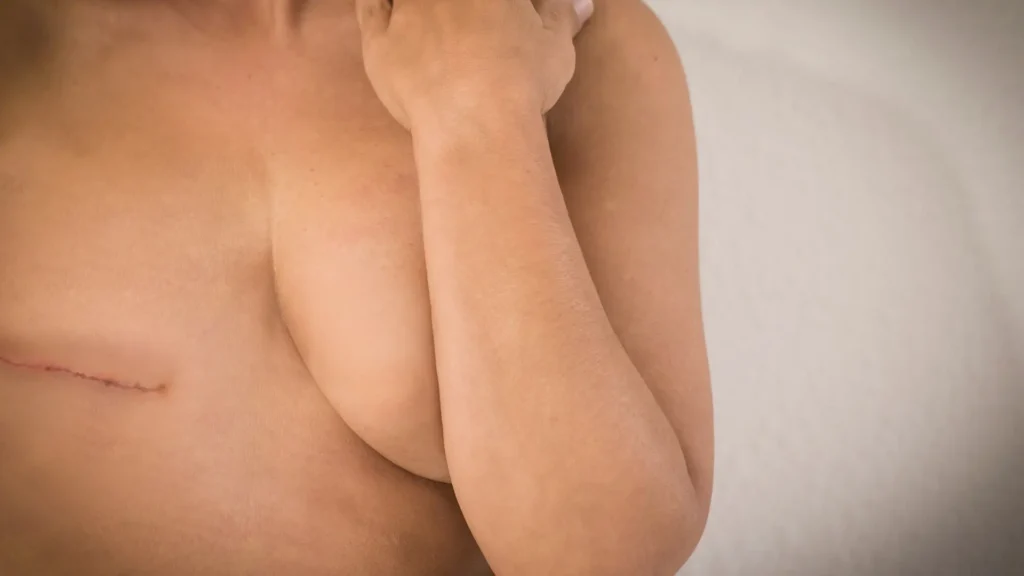
Scars
The location and length of scars depend on the surgical technique used:
- Liposuction technique: Involves a minimal incision, usually less than 5 mm, made in a discreet area of the lower chest wall. This results in a small, barely visible scar.
- Subcutaneous mastectomy (glandular reduction): The incision is hemi-areolar, camouflaged along the transition between the areola and surrounding skin.
- With areola or skin reduction: The scar may extend around the entire circumference of the areola but remains discreet due to its natural placement along the areolo-cutaneous border.
Technical description
The surgical approach depends on the cause of breast enlargement (fatty tissue, glandular hypertrophy, or excess skin/areolar tissue).
- Liposuction: Recommended when gynaecomastia is primarily caused by excess fat (including cases related to obesity). This method uses small incisions and specialised cannulas to remove the fatty tissue.
- Subcutaneous mastectomy: Indicated when there is significant glandular hypertrophy or excess skin/areola. The procedure involves a hemi-areolar or peri-areolar incision to surgically remove glandular tissue, reduce the areola, and correct sagging. Liposuction may also be combined for better contouring.
Type of anaesthesia
Both liposuction and subcutaneous mastectomy can be performed under sedoanalgesia (local anaesthesia with sedation) or general anaesthesia, often using a laryngeal mask — a lighter form of general anaesthesia that allows for a faster and smoother recovery.
Results and benefits
The results of male breast reduction surgery are immediately visible, providing a significant improvement in body contour and self-image.
Key benefits include:
- Enhanced self-esteem due to improved physical appearance and body harmony;
- Better quality of life;
- Greater freedom of movement in daily activities and exercise;
- More confidence and flexibility in clothing choices.
Recovery
Most patients can return to work within 2 to 5 days.
Post-operative care
Recovery is usually done at home, with or without a short hospital stay (less than 24 hours).
- A compression garment or chest band should be worn for 3 to 4 weeks to support healing and minimise swelling.
- Follow all prescribed medications and medical instructions carefully.
- Avoid activities involving extensive arm movement during the first few weeks.
- Gentle daily routines can be resumed early, but intense exercise and heavy lifting should be avoided during the initial recovery phase.
Following these recommendations helps ensure smooth healing and long-lasting, natural-looking results.