What is it
Lower blepharoplasty is a surgical procedure that involves removing excess skin, fat, and muscle from the lower eyelids to reduce the appearance of bags and puffiness under the eyes, creating a more youthful and refreshed look.
It is typically performed on individuals with loose or wrinkled lower eyelids or puffiness caused by excess fat deposits. Lower blepharoplasty can also address hereditary traits such as naturally puffy or prominent lower eyelids that cause aesthetic or functional concerns.
The surgery is usually performed under local anaesthesia with sedation or general anaesthesia and typically takes one to two hours to complete, depending on the complexity of the case and the amount of tissue to be removed.
Who is it for
Lower blepharoplasty is usually recommended for individuals who have one or more of the following cosmetic or functional concerns:
- Bags or puffiness under the eyes: Excess fat or loose skin that creates a tired or aged appearance.
- Dark circles: Persistent discolouration or shadowing beneath the eyes that does not improve with rest or skincare.
- Functional issues: Sagging or drooping lower eyelids that interfere with vision or cause discomfort.
It is important to consult an experienced plastic surgeon to determine whether lower blepharoplasty is suitable and to discuss the specific details, potential risks, and complications of the procedure.
Scars
Scars from lower blepharoplasty are generally minimal and well hidden. The location and length of the incision depend on the technique used and the amount of tissue to be removed or repositioned.
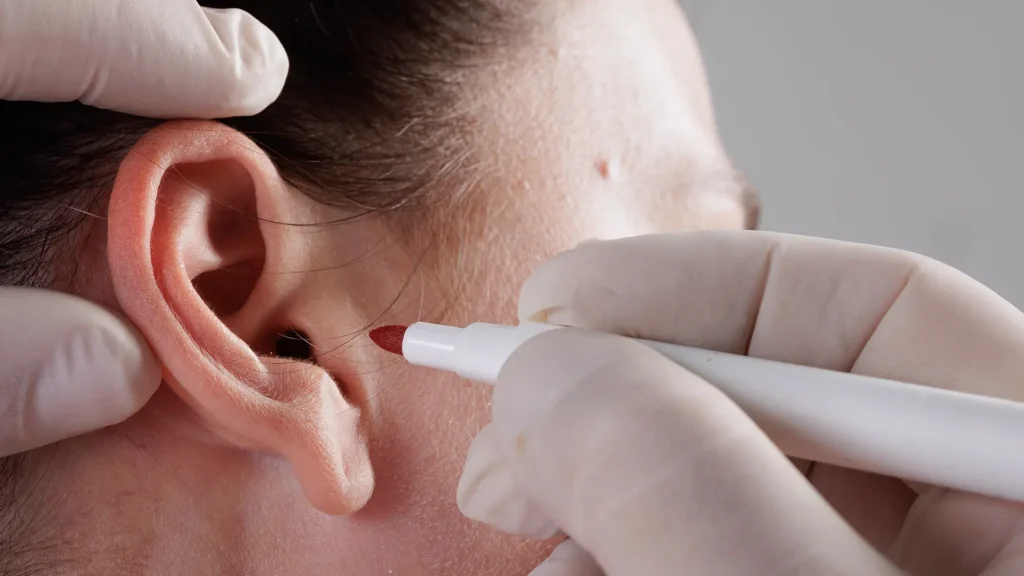
In a traditional lower blepharoplasty, the incision is made just below the lower lash line, allowing the surgeon to remove or reposition excess skin, fat, and muscle. The resulting scar is thin and concealed within the natural crease below the lashes.
In a transconjunctival blepharoplasty, the incision is made inside the lower eyelid, leaving no external scar.
With proper care, the scars fade over time and become almost invisible. Following the surgeon’s postoperative instructions is crucial for optimal healing and minimal scarring.
Technical Description
A lower blepharoplasty typically involves the following steps:
- Anaesthesia: The surgeon administers local anaesthesia with sedation or general anaesthesia, depending on the extent of the surgery and patient preference.
- Incision: A small incision is made either just below the lash line or inside the lower eyelid, depending on the technique and amount of tissue to be addressed.
- Tissue removal or repositioning: The surgeon removes or repositions excess skin, fat, and muscle to smooth and rejuvenate the lower eyelid area. In some cases, remaining tissue is repositioned to improve contour and symmetry.
- Closure: The incision is closed with fine sutures, which may be dissolvable in some cases.
- Postoperative care: The patient receives instructions on wound care, managing swelling, and medication use. Ice compresses, rest, and avoiding strenuous activity are typically recommended.
Lower blepharoplasty is a relatively safe and straightforward procedure that can effectively reduce under-eye bags and puffiness, providing a refreshed and youthful appearance.
Type of Anaesthesia
The type of anaesthesia used in lower blepharoplasty varies depending on the patient’s preference, the extent of the procedure, and the surgeon’s recommendation. The main options include:
- Local anaesthesia with sedation: A local anaesthetic is injected into the eyelid area to numb it while the patient remains awake and relaxed.
- General anaesthesia: The patient is placed under deep sleep for the duration of the procedure, which may be preferred for more extensive surgeries or patient comfort.
The surgeon will discuss the best option based on the patient’s medical history, preferences, and surgical plan to ensure comfort and safety throughout the procedure.
Results and Benefits
Lower blepharoplasty can provide significant improvements in the appearance of the lower eyelids and surrounding areas, resulting in a rejuvenated and rested look. Benefits include:
- Reduction of under-eye bags: Removal or repositioning of excess fat and tissue reduces puffiness and bagginess.
- Smoothing of wrinkles and fine lines: Removing excess skin helps smooth creases around the lower eyelids.
- Improved contour and symmetry: Repositioning tissues enhances the overall balance and aesthetic of the lower eyelids.
- Better vision: In some cases, the procedure can improve sight if excess tissue was obstructing the field of vision.
Results are typically long-lasting, although the natural ageing process may gradually reintroduce some skin laxity or puffiness. Maintaining a healthy lifestyle and proper skin care can help prolong the results.
Recovery
Recovery time varies depending on the extent of the procedure and individual healing capacity. In general:
- Mild swelling, bruising, and discomfort may occur during the first few days.
- The surgeon may prescribe pain medication and recommend cold compresses to reduce swelling and bruising.
- The head should be kept elevated, and bending or lifting heavy objects should be avoided for several days.
- Stitches are typically removed after about a week.
- Contact lenses and eye makeup should be avoided for at least one week.
- Light activities can usually be resumed within a few days, and most patients return to work after one to two weeks.
- Strenuous activities, heavy lifting, and vigorous exercise should be avoided for two to three weeks.
Following the surgeon’s instructions ensures proper healing and minimises the risk of complications.
Post-operative Care
Postoperative care after lower blepharoplasty is essential for smooth healing and optimal results:
- Apply cold compresses: Use as recommended to reduce swelling and bruising.
- Take prescribed medication: Follow instructions for pain relief and anti-inflammatory medication.
- Keep the head elevated: Sleep or rest with the head raised to reduce swelling.
- Avoid strenuous activity: Refrain from heavy lifting, exercise, or intense activity for at least two to three weeks.
- Avoid smoking and alcohol: Both can interfere with healing and increase complication risks.
- Eat a healthy diet: A balanced diet supports healing and tissue repair.
- Attend follow-up appointments: Regular check-ups allow the surgeon to monitor recovery and address any issues promptly.
Following these guidelines helps ensure proper healing, minimal scarring, and long-lasting aesthetic improvement after lower blepharoplasty.