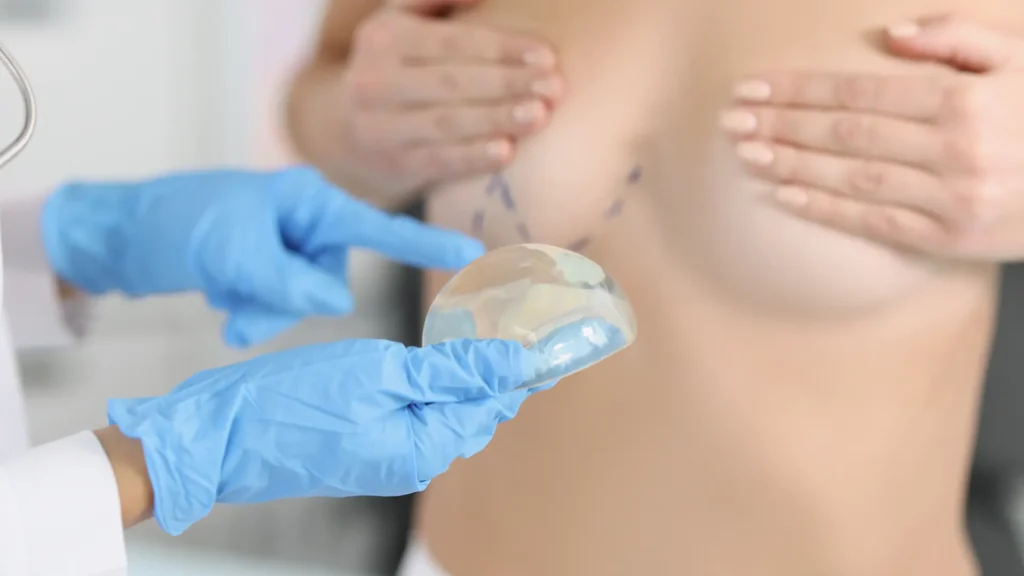
This is a surgical procedure that allows the reduction of excessive breast volume and weight (macromastia) through the removal of excess skin, fat, and some glandular tissue. At the same time, it improves the shape, symmetry (including the areolas), and positioning of the breasts, providing more volume in the upper pole.
It is indicated for women dissatisfied with the weight and volume of their breasts, usually associated with sagging. They often complain of:
It is also indicated for women who believe that weight reduction will bring better health and body harmony, and who are:
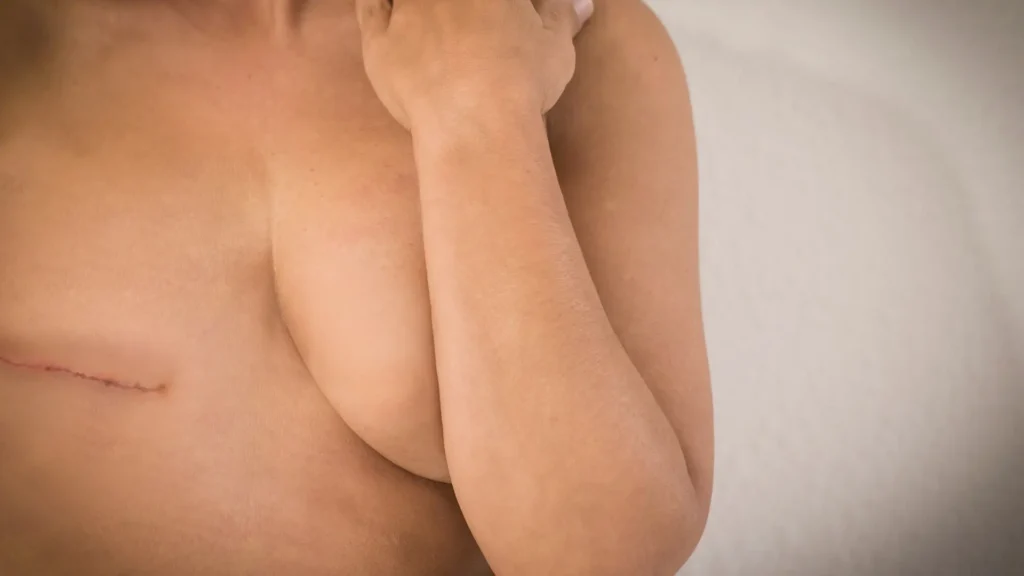
The location and extent of the scars are adapted to each case, depending on the degree of hypertrophy and sagging. In very mild reductions, the surgery may be performed through an incision limited to the periareolar area, but it generally also involves a vertical incision below the areola and a horizontal incision (resulting in an inverted T-shaped scar), camouflaged in the lower breast crease. The length of the incision depends on the amount of breast tissue and skin removed.
Breast reduction is performed through incisions that vary in location and extent, through which fatty-glandular breast tissue and excess skin are removed, followed by breast remodelling with superior repositioning of the nipple–areola complex.
In selected cases of breast hypertrophy, reduction can be achieved through liposuction techniques, resulting in minimal scarring.
Breast reduction is performed under general anaesthesia, often using a laryngeal mask — a lighter type of general anaesthesia that allows postoperative recovery to be faster and better tolerated.
The results of breast reduction surgery are immediately visible, both in terms of body harmony and comfort. In the following weeks, swelling subsides and scars fade, resulting in a very favourable outcome for self-image.
The benefits are felt at various levels:
After a short hospital stay of 24–48 hours, recovery can normally take place at home.