What is it
Nipple inversion is usually a congenital malformation, although it may also develop later in life. It can appear unilaterally or bilaterally, with varying degrees of inversion or retraction: from grade I, where the nipple everts spontaneously or with manual stimulation, to grade III, where it remains retracted even with provocation manoeuvres.
This condition results from the retraction of the lactiferous ducts, which may be congenitally short or undergo inflammatory or fibrous contraction. It can also be associated with alterations in the activity of the areolar sphincter muscle. Although more common in women, it may also occur in men.
Who is it for
Surgery to correct nipple inversion is indicated when the condition causes aesthetic concern or functional difficulties, such as problems with breastfeeding. Many patients seek the procedure for reasons of self-esteem, aesthetic balance, or discomfort with the appearance of the retracted nipple.
Scars
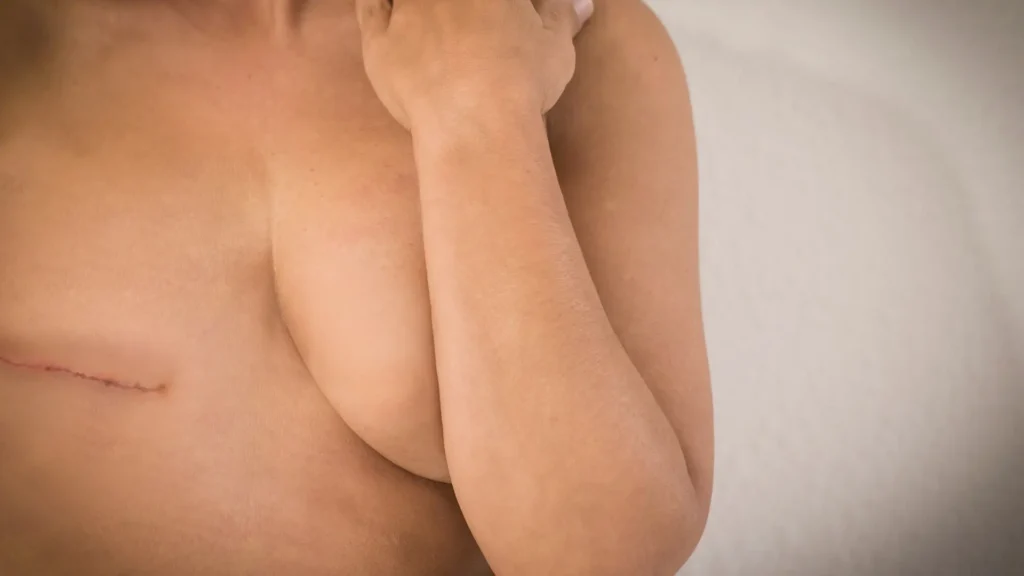
The resulting scars are minimal and almost imperceptible, discreetly located at the periphery of the nipple. This delicate surgical approach ensures a natural aesthetic result, with no visible marks after complete healing.
Technical Description
Correction is performed through very small and discreet incisions around the nipple, allowing the release of the retractile structures responsible for the inversion. The nipple is then elevated and supported by a specific suture technique that maintains its new position and prevents recurrence of retraction. It is a simple, quick procedure with predictable results.
Type of Anaesthesia
Nipple correction is performed under local anaesthesia, ensuring comfort during the procedure and avoiding the need for hospitalisation.
Results and Benefits
The results are immediate, with a clear aesthetic improvement and restoration of the natural contour and projection of the nipple. The effect is particularly noticeable in cases of unilateral inversion, where asymmetry is visible and can affect clothing or self-image. The final result is harmonious, natural, and provides greater confidence for the patient.
Recovery
Recovery is simple and quick, allowing an immediate return to work and daily activities. Post-operative discomfort is minimal, and prolonged rest is rarely necessary.
Post-operative Care
After surgery, the patient should follow the recommendations and prescribed medication from the medical team. Although no special care is required, it is advisable to avoid wide or sudden arm movements during the first few days to protect the healing process.