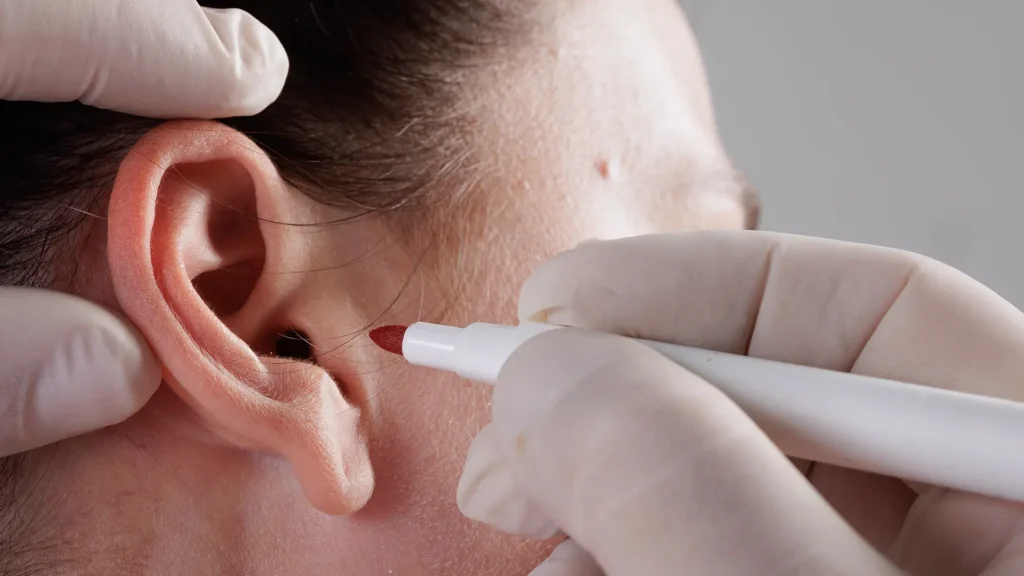
Otoplasty — also known as ear reshaping surgery — is a cosmetic procedure designed to change the shape, size, or position of the ears.
It is most often performed on individuals who feel self-conscious about ears that stick out too far from the head or have an irregular shape.
The procedure can be carried out once the ears have reached their full size — typically around five years of age.
Candidates for otoplasty should be emotionally mature and have a clear understanding of their motivations for surgery.
In children, otoplasty is commonly performed before starting school to prevent psychological stress or self-image issues caused by teasing.
Otoplasty is indicated in cases such as:
The procedure is usually bilateral, to ensure optimal balance and symmetry between both ears.
It is important to note that otoplasty does not affect hearing.
The scar from otoplasty is hidden behind the ear, located in the natural fold between the ear and the scalp. This placement ensures that it is virtually invisible once healed.
The surgical technique depends on the specific correction required and the desired aesthetic result. The chosen approach will be explained in detail during the consultation.
In general, the surgeon removes excess skin and reshapes or folds the cartilage to achieve the new ear contour. The result is a natural and harmonious ear position relative to the head.
Otoplasty is typically performed under local anaesthesia with sedation.
In younger children, general anaesthesia may be preferred to ensure comfort and safety.
While the patient’s preference is considered, the final decision on the type of anaesthesia is made by the anaesthesiologist, taking into account the surgical plan and the patient’s medical history.
Once the dressing is removed, the results are immediate and clearly visible. The reshaped ear maintains its new contour and position permanently.
Benefits include:
Most patients can return to work or school within one week.
Otoplasty is performed on an outpatient basis (no overnight hospital stay).
With proper care, otoplasty offers a safe, effective, and lasting improvement in both ear aesthetics and self-confidence.